

The Museum
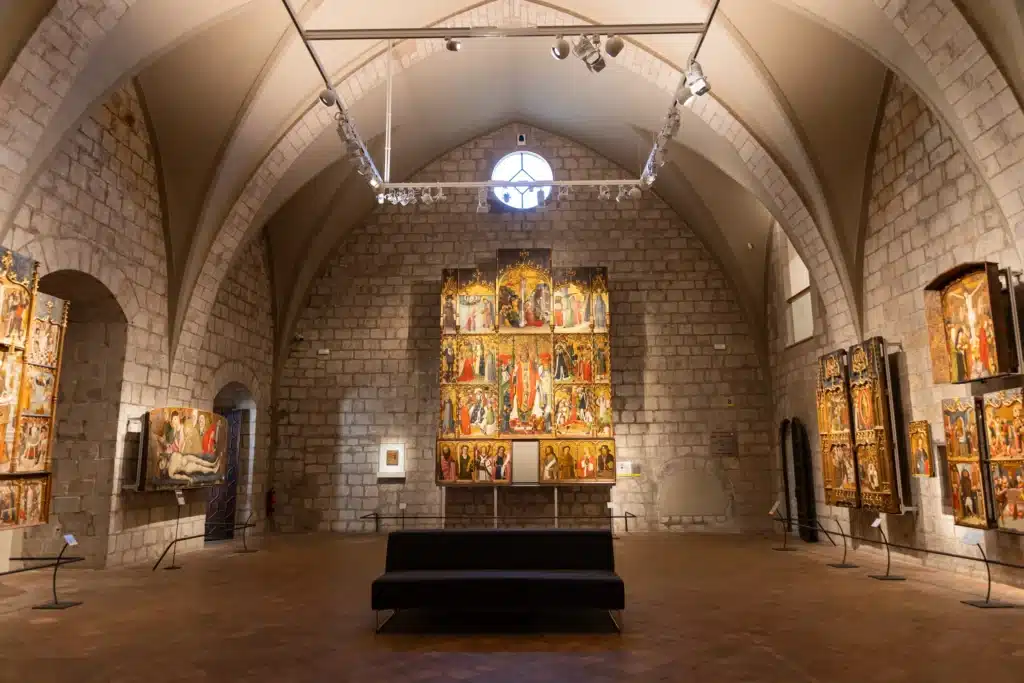
A thousand years of Catalan art in the heart of Girona
The Girona Art Museum preserves and displays the most important art collection of the Diocese and the province of Girona. Located in the majestic Episcopal Palace beside the cathedral, it offers a unique journey through the history of Catalan art, from the Romanesque period to the artistic expressions of the 20th century.
The exhibition itinerary presents, in chronological order, a remarkable set of pictorial and sculptural works that embrace Romanesque, Gothic, Renaissance, Baroque, Realism, Modernism and Noucentisme. The Museum complements this collection with monographic rooms dedicated to ceramics, glass and liturgical art, as well as spaces focused on various artistic techniques.
The Museum’s collection includes pieces such as the exceptional liturgical ensemble of Sant Pere de Rodes (9th century), the delicate Martyrology of Usuard – an illuminated book from the 15th century – or one of the most significant collections of altarpieces from the 15th-16th centuries. The collection also includes representative works from the Catalan Renaissance and Baroque, and culminates with a selection of works by artists from the 19th and 20th centuries linked to Girona, including Urgell, Vayreda, Rusiñol, Berga and Bertrana, among others.
A Museum with history
The Girona Art Museum was founded in 1976, the result of the union of two large collections: the Provincial Museum of Antiquities and Fine Arts and the Diocesan Museum of Girona.
The Provincial Museum of Antiquities and Fine Arts, created in 1845, was born with the aim of preserving artistic and archaeological works from buildings secularized following the confiscations of Mendizábal (1835). Its original headquarters, inaugurated in 1850, was the monastery of Sant Pere de Galligants, which currently houses the Museum of Archaeology of Catalonia in Girona.
The Diocesan Museum of Girona, founded in 1942 under the tutelage of Bishop Josep Cartañà, integrated the art and archaeology collections gathered by Canon Ramon Font and Father Pere Valls. Since 1929, this heritage has been exhibited in the Throne Room of the Episcopal Palace, the current location of the Art Museum.
The establishment of the Girona Art Museum meant that the Girona Provincial Council assumed its management, while the Bishopric ceded the Episcopal Palace as its permanent headquarters. Between 1979 and 1991, the building underwent several phases of modernization and adaptation. In 1992, the Generalitat de Catalunya took over the management of the museum, and promoted the expansion of the museum collection.
Since 2014, the institution has been part of the Catalan Agency for Cultural Heritage, consolidating itself as a benchmark in the preservation and dissemination of the artistic heritage of the province of Girona.
Did you know that...?
The Girona Art Museum houses more than 13,000 catalogued works, constituting one of the most numerous and richest collections in Catalonia.
The permanent exhibition begins with a fragment of an early Christian tombstone from Empúries, one of the oldest pieces in the Museum.
The Lioness of Girona, a sculptural emblem of the city, is part of the Museum’s permanent exhibition.
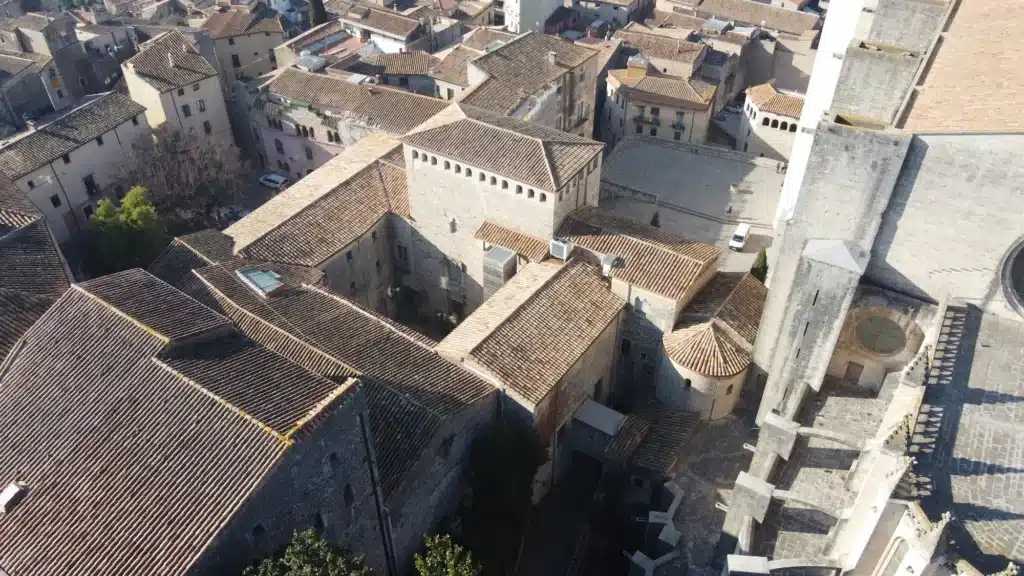
The former Episcopal Palace
The Art Museum is located in the exceptional setting of the former Episcopal Palace, first documented in the 10th century. The building still preserves several spaces that correspond to its original function, such as the prison, where clergymen condemned by the ecclesiastical court served sentences, and the majestic garden, which is occasionally open to the public.
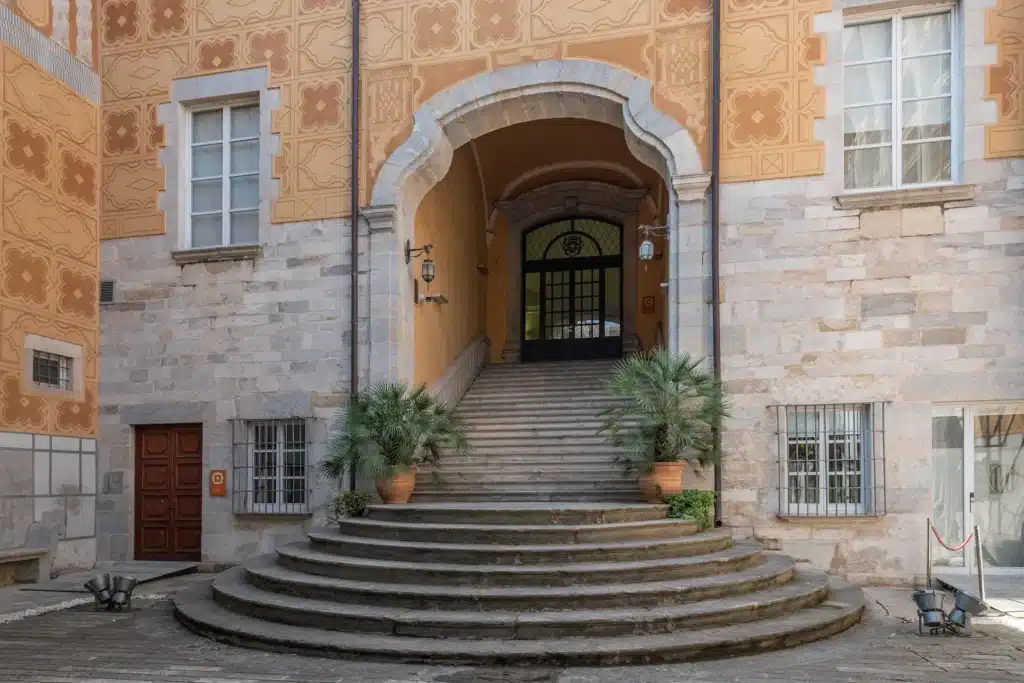
The Former Santa Caterina Hospital
The Museum manages the heritage spaces of the Former Santa Caterina Hospital, current headquarters of the Generalitat of Catalonia in Girona. The building, from the Baroque period, contains the hospital pharmacy from the 17th-18th centuries, the former chapel where the painting El gran dia de Girona (1864-65) , by Ramon Martí Alsina, is exhibited, the Magonlia Courtyard and the entrance hall with 17th-century wall tiles.