In 2025, several works became part of the Museum’s collection, either through direct purchase, donations or deposits.
Direct purchase
Regarding direct purchases , throughout 2025 we acquired:
Two advertising posters for the Costa Brava from 1958, each with a different slogan, by Juan Santandreu and Bartolomé Liarte , showing the sea on the left, a small village of white houses next to the beach, and the Pyrenees on one of the two posters. Bartolomé Liarte (1933-1998) dedicated himself to the world of advertising after studying at the Escola d’Art i Oficis de Gràcia and at the Llotja. We have no references to Santandreu;
graphic work and drawings by Roser Bru i Llop , to whom we dedicated an exhibition in 2024. The acquired pieces are an engraving, two watercolors, two drawings and two ink drawings, from the family legacy of Marçal Marimon and Teresa Fort, who coincided with the Bru-Llop family on the journey with the ship Winnipeg at the end of the Spanish Civil War, and with whom they maintained a close friendship;
the drawing Girona LC (loosing control) 39 enactments , by Martin Walde , which shows a character in a corner of the Old Quarter of Girona and a group of tourists observing him. The piece, from 1997, belongs to the period of Enactments (performances), storyboards that the artist took in urban areas. Walde lives and works in Vienna and New York, and his work is represented in a number of museums around the world;
the visual work 3,325 by Albert Coma Fàbrega , made in the context of the project ” Museum in the Territory “, an artistic intervention based on the mural paintings of Pedrinyà preserved by the Art Museum. It is a visual projection on the apse of the church of Pedrinyà, where 3,325 possible paintings are presented that could have been painted before, or in the future, or in another place;
and four paintings from the Varés family, specifically an oil by Segismon de Nagy and one by Josep Gelabert , and two watercolors: one by Joaquim Claret and another by Rafel Mas , four artists with whom Arturo Varès and his son, Antoni Varès, had maintained a relationship.
During 2025, the Art Museum has also received several donations :
A lithograph by Esther Boix , donated by Víctor López, which belongs to the series Jardins però no de somni , from 1980, and which corresponds to the period in which her work leaves behind the most political and social commitment and gives way to the vindication of nature and environmentalism;
three watercolor recreations of the Episcopal Palace of Girona, by Jordi Sagrera , donated by the author and which recreate an ideal historical vision, from a bird’s eye view, of what the Palace would have been like in the 15th century. The three pieces illustrate the monographic study of this building, published in 2024;
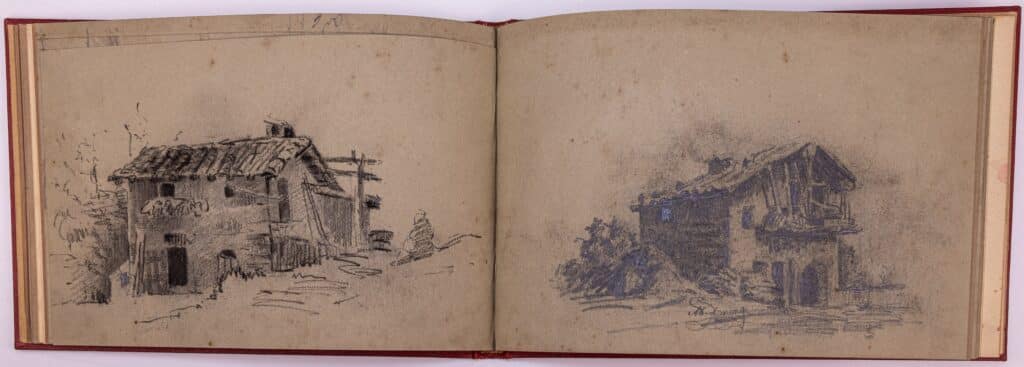
an album of drawings by Melcior Domenge i Antiga , donated by the Friends of the Art Museum , made when he was between thirteen and fifteen years old, shortly before inaugurating his first exhibition at the Sala Parés (1887) and having as a mentor his teacher and founder of the Olot School, Joaquim Vayreda;
eight lithographs by various Catalan authors, among whom we find Joan Hernández Pijuan, Josep Maria Subirachs, Josep Guinovart, Joan Josep Tharrats, Montserrat Gudiol and Jorge Castillo , donated by Dolors Fulcarà, and published between 1975 and 1978 by Torras Hostench SA, a paper company located in Sarrià de Ter;
several works by the Busquets i Mollera Brothers , donated by Isabel Codina, among which are several preparatory sketches of decorative projects, furniture, typographic works, as well as small-format paintings, caricatures of Girona characters, photographs and documentation;
an oil by Joan Orihuel from the 1960s-1970s, donated by Néstor Arrastia. Orihuel is remembered above all as the post-war painter from Girona, and was one of the founders and active members of the Girona Artistic Circle. In 1950 he went to Buenos Aires, where he lived the last days of his life;
Melcior Domenge i Antiga (Olot, 1871-1939). Album of drawings. C. 1884 – 1886
DEPOSITS
Finally, in relation to the deposits , several works acquired by the Generalitat de Catalunya have been incorporated. Specifically:
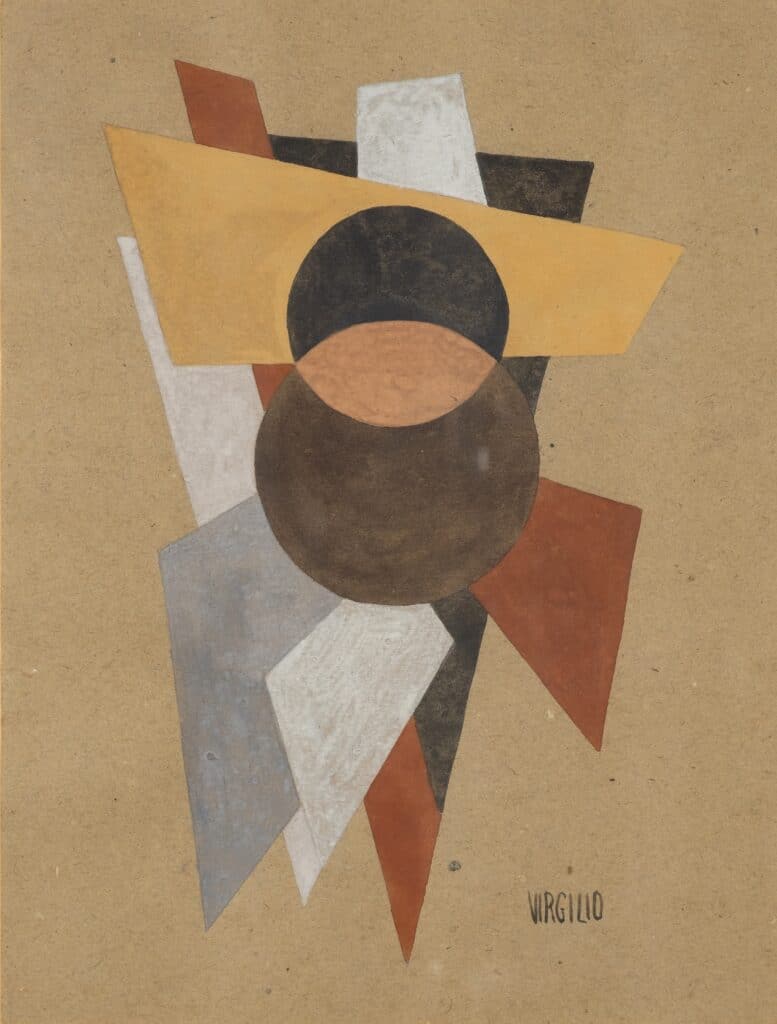
An untitled piece by Virgili Batlle from Olot, c.1940-1945. The author was linked to anarchist movements, which led him to exile in France in 1939. In Paris he came into contact with pictorial modernity and became interested in analytical cubism. He died of tuberculosis at the age of 33;
a table of Saint Anthony the Abbot from the early 16th century, of anonymous authorship ( circle of John of Burgundy and the Master of Argelès ). This is a work linked to the pictorial renewal characteristic of the Renaissance in Catalonia, and is a witness to the arrival of northern European artists who contributed decisively to the transformation of local plastic arts;
the work Les roques de Cadaqués , from 1964, by Francesc Todó , made at a time when the artist’s aesthetics were becoming more intimate and which clearly represented his surroundings;
an untitled piece from 1980 by Jaume Faixó , which is part of his smoke paintings series. The color black appears as the main element of the work along with the geometric shapes that, despite being erratic and arrhythmic, consist of a linear structure that functions as an element that orders the pictorial space;
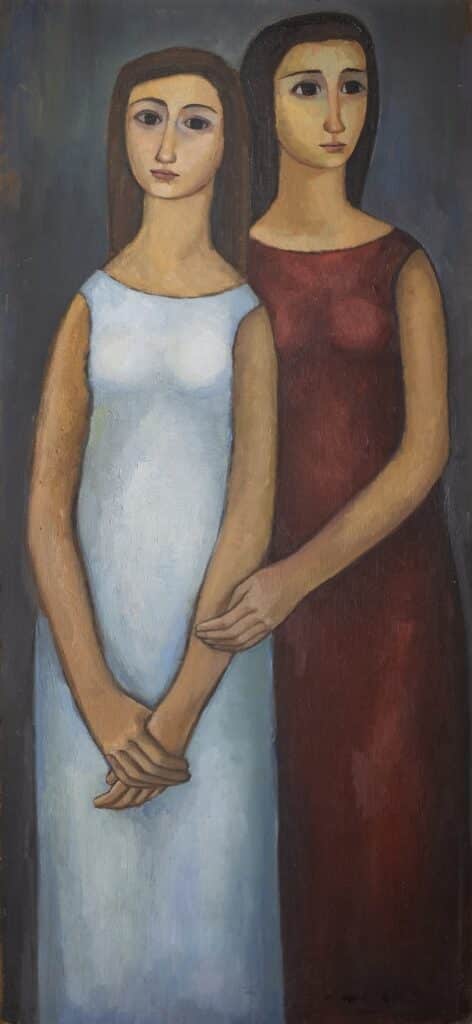
Girls , c.1950-1960, by Aurora Gassó , a significant work from the beginning of the artist’s career that depicts two female figures surrounded by a special atmosphere. The two girls convey an earthly femininity and serenity, expressing what we today define as sisterhood;
6 relevant works of 20th-century Catalan art, from the Garcés Collection, specifically NS vermell , by Sergi Aguilar , from 1993; two pieces by Frederic Amat , Cinc from 1989 and Sol negro , from 2003; Caps lligats , by Jesús Carles Vilallonga , from 1975; Angulo/superfície/espacio cuadrado 91 , by Erwin Bechtold , from 1991; and Creació de l’espai , by Gabriel Sanz , from 2003.
Aurora Gassó Grau. “Girls”, c. 1950-1960Virgili Batlle Vallmajó Untitled, c. 1940-1945