

The Episcopal Palace of Girona
A thousand years of history
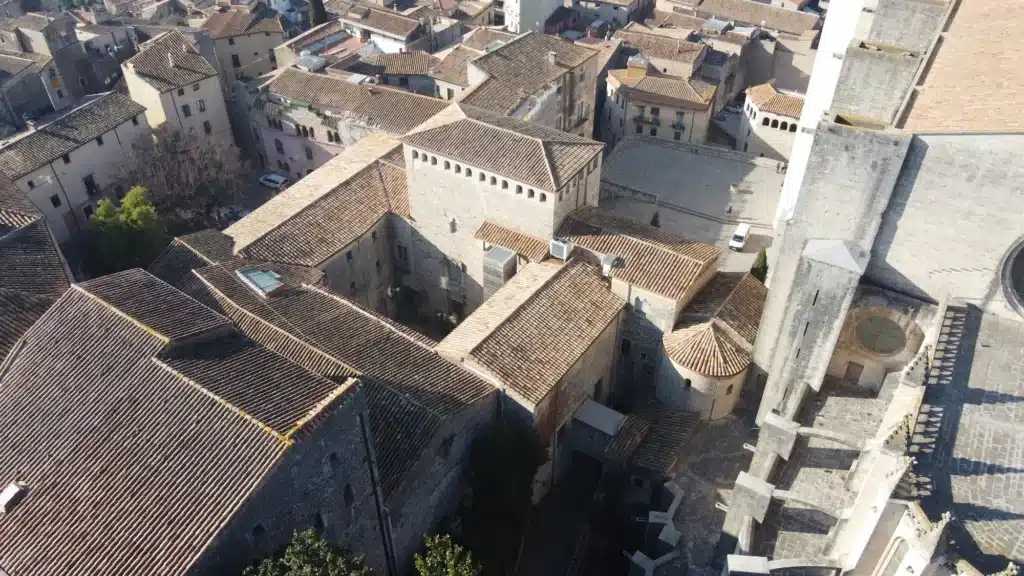
The Episcopal Palace of Girona is one of the most emblematic buildings in the city, both for its grandeur and for its rich history spaninng more than a thousand years. Today, it houses the Girona Art Museum and stands beside the Cathedral of Santa Maria, overlooking the city that has gradually expanded at its feet.
The first documentary reference to the Palace dates back to the year 988, when Bishop Gotmar purchased a house from Count Borrell, close to the original palace, of which no identifiable remains survive. From the episcopate of Guillem de Peratallada (1161-1168) onwards, the building began to take on the form of a castle or fortified palace, with galleries, mullioned windows, two towers and the Throne Hall. Several emblematic spaces were also built at this time, which today form part of the museum’s offices and permanent exhibition galleries.
In the 16th century, the Palace underwent several Renaissance-style extensions. Large windows were opened, displaying the coats of arms of the bishops who commissioned them, while the interior took a more residential character. In the 17th century, work focused on constructin the section facing Plaça Lledoners. After the damage suffered during the Napoleonic sieges (1808-1809), the Palace was restored and expanded to reach its present size.
During the Civil War (1936), the bishop abandoned the building and there were plans to create a Museum of the People. After Francoist victory (1939), the Palace regained its episcopal function.
Beyond its architecture and function as a bishop’s residence, the Palace also played an important role in the political and social life of Girona. It housed the Ecclesiastical Court and still preserves an old prison. Unlike many prisons of the time, this was a relatively comfortable space with wide views over the city. Some imprisioned clergymen left inscriptions on the walls, including one recounting a 91-day imprisonment due to a “fatal accident”: “ no por el quoniam estuvi aquí / aunque muje fue causa tal / sí solo por accidente fatal / sí porqué 91 días viví ahí” .
The Palace also hosted royal visits throughout history. In the 14th century, Peter the Ceremonious ordered the construction of a wooden bridge to connect his chamber in the Palace with the Orchard. In the 15th century, Ferdinand the Catholic visited the building, and in the 16th century the coat of arms of Charles V was placed in the Throne Hall in memory of his stay.
Today, the Episcopal Palace remains a central landmark of Girona. With a history dating back to the Middle Ages, it has left a profound mark on the city’s architecture and life. The Girona Art Museum, which occupies this remarkable building, offers a privileged insight into the past of a monumental palace that has witnessed centuries of history.
Did you know that...?
The Ecclesiastical Court once had its headquartes in the palace. Clergymen condemned for various sins and crimes were imprisoned in the jail that still exists today. Compared with other prisions of the period, it was relatively comfortable. Rather than a dark, damp dungeon, it was located on the fourth floor of the main tower, and offering prisioners wide views over the city. Records also indicate the presence of a fireplace to keep the inmates warm.
The Girona Art Museum
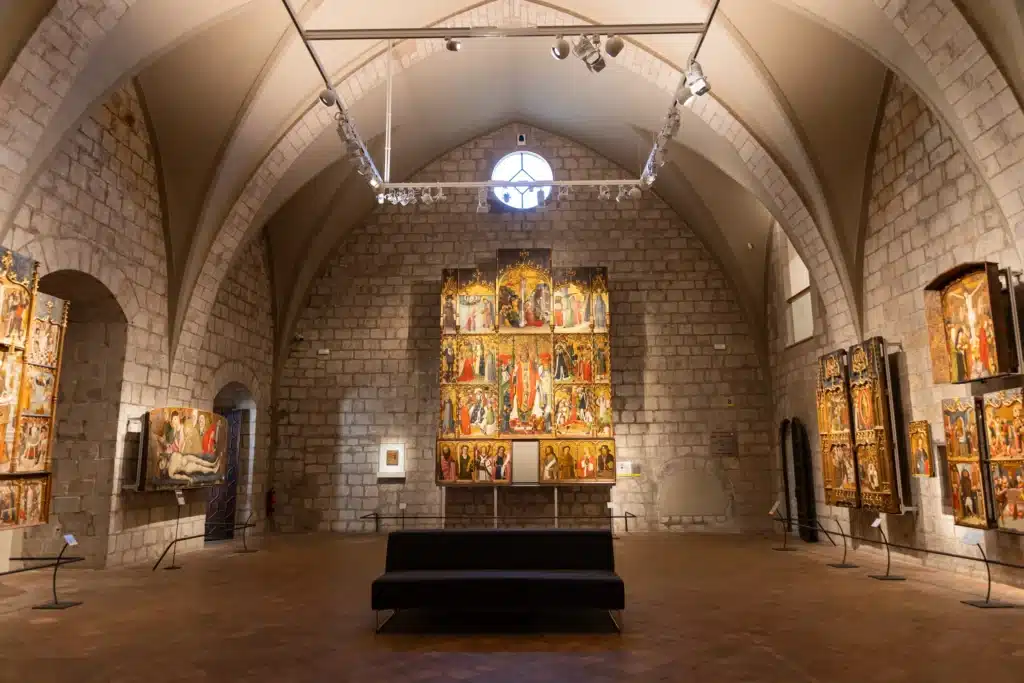
The Girona Art Museum preserves and displays the most important art collection of the Diocese and the province of Girona. Located in the majestic Episcopal Palace beside the cathedral, it offers a unique journey through the history of Catalan art, from the Romanesque period to the artistic expressions of the 20th century.
The Former Santa Caterina Hospital
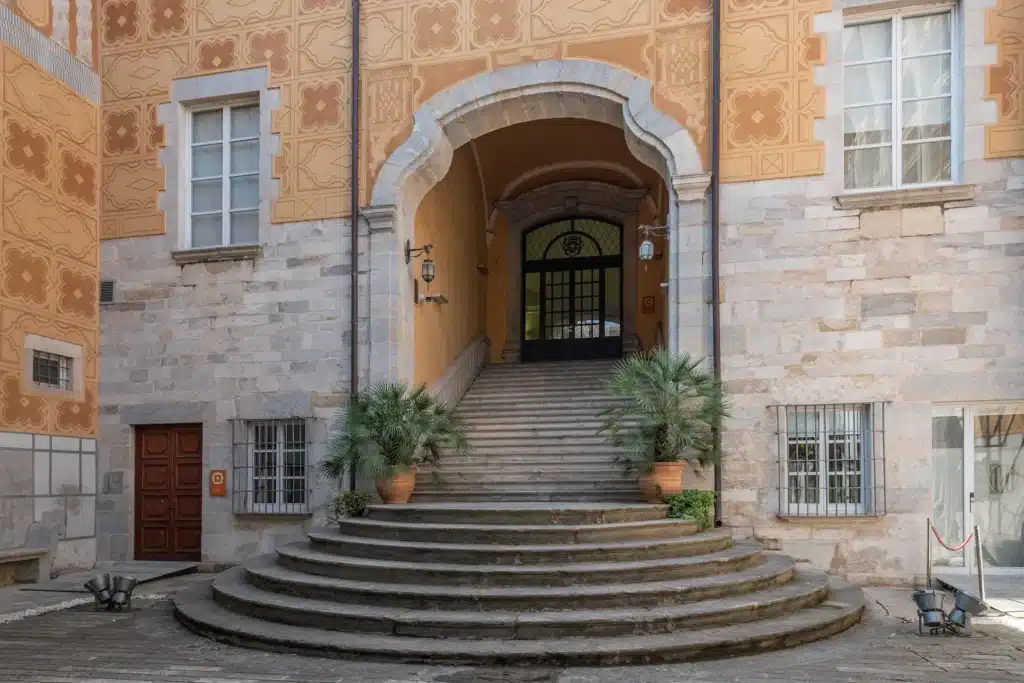
The Museum manages the heritage spaces of the Former Santa Caterina Hospital, currently the headquarters of the Government of Catalonia in Girona. This Baroque building contains the hospital pharmacy from the 17th-18th centuries, the former chapel where the painting El gran dia de Girona (1864-65), by Ramon Martí Alsina, is exhibited, the Magnolia Courtyard and the entrance hall with with 17th-century wall tiles.