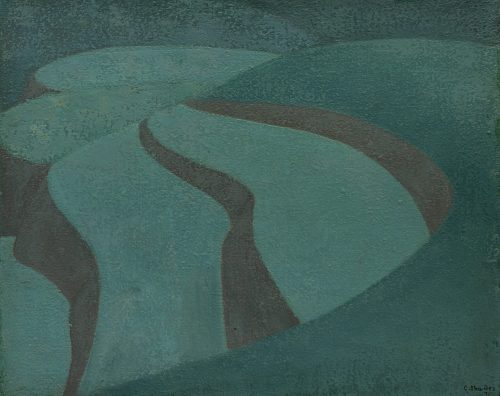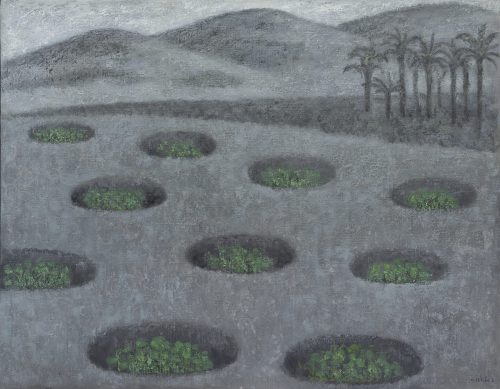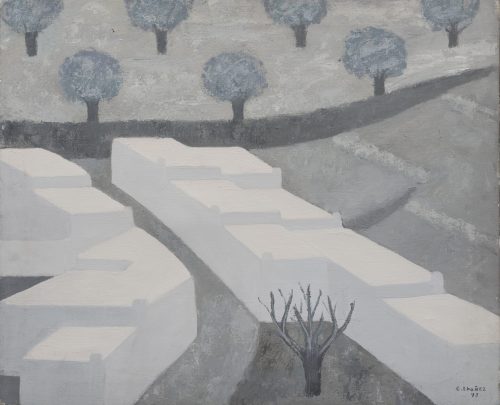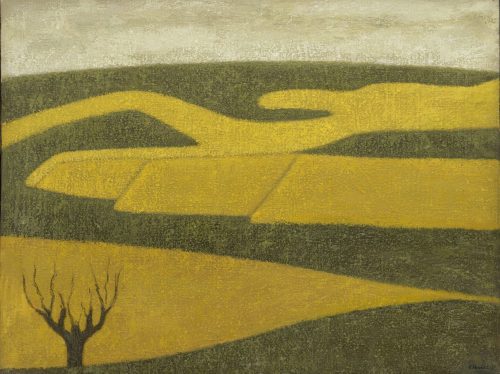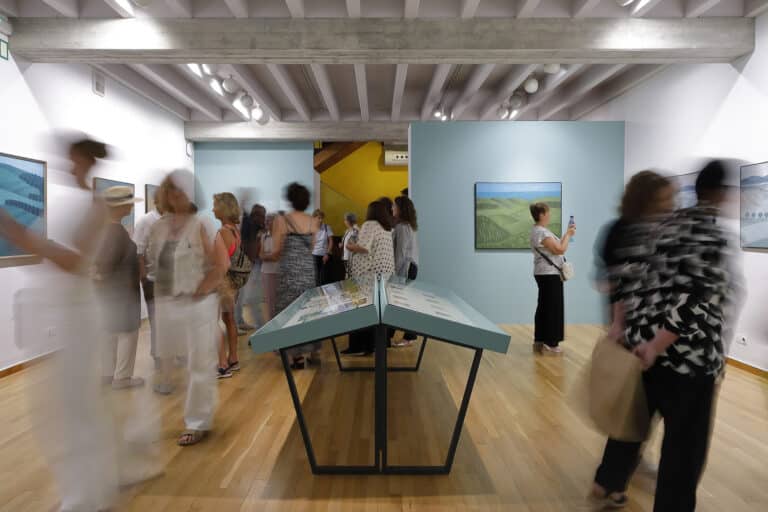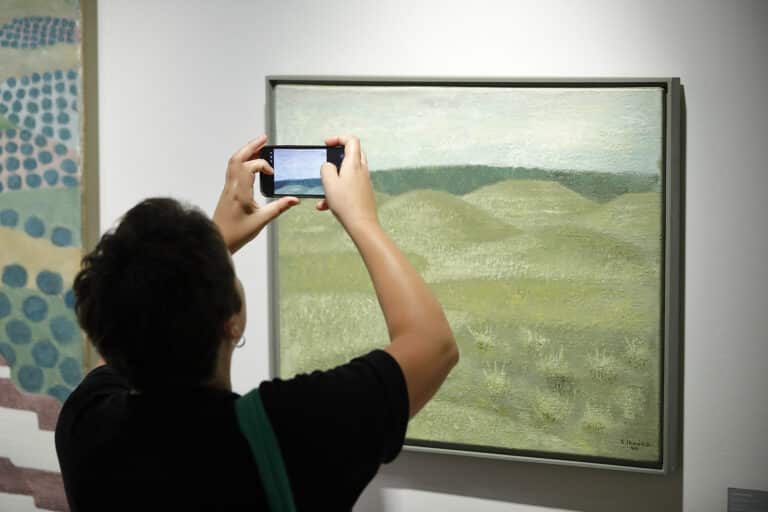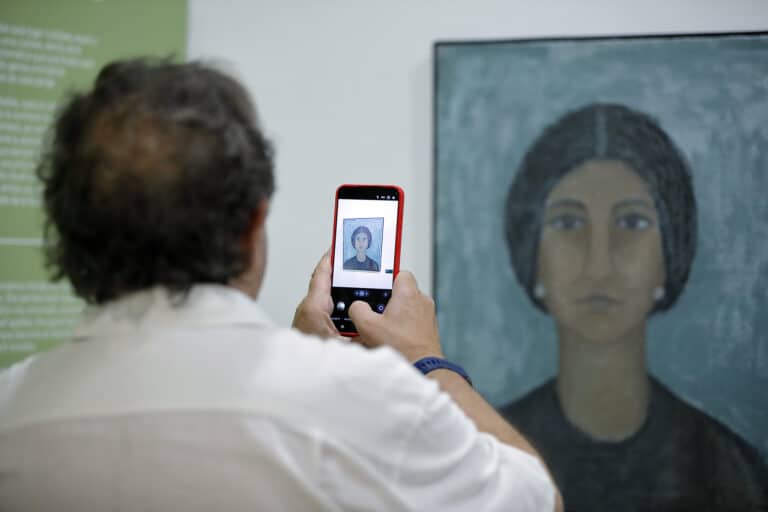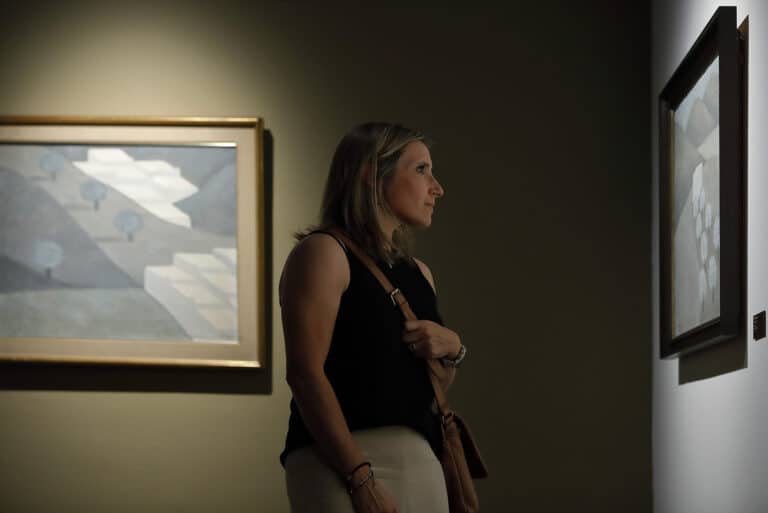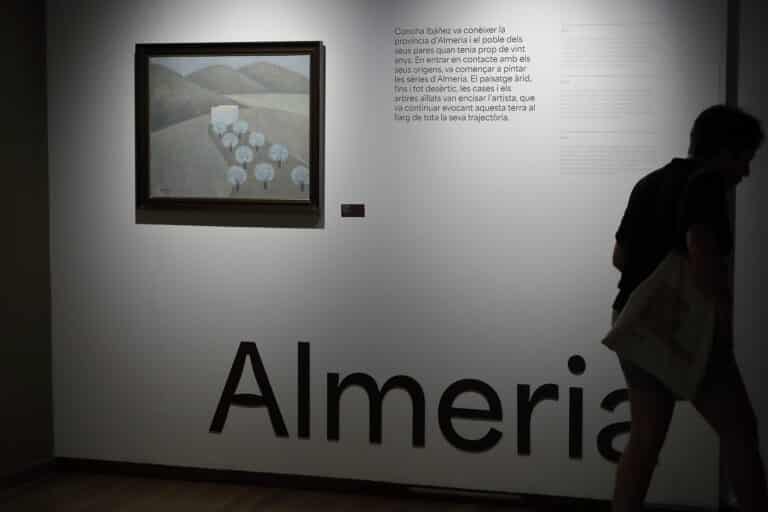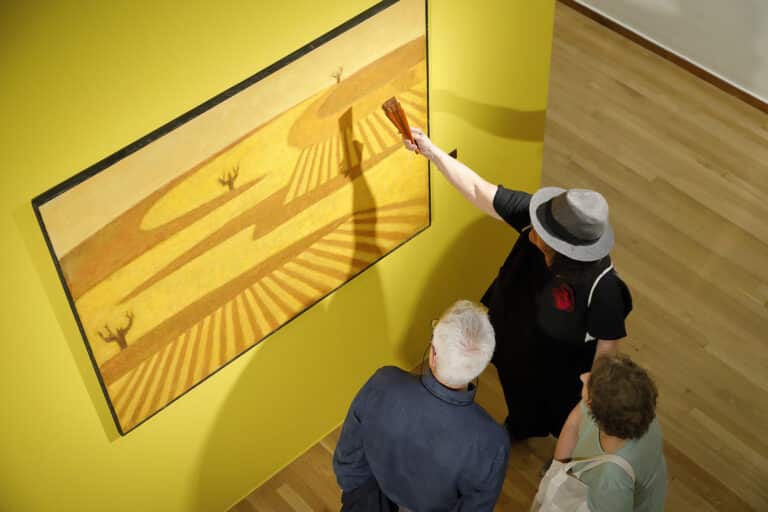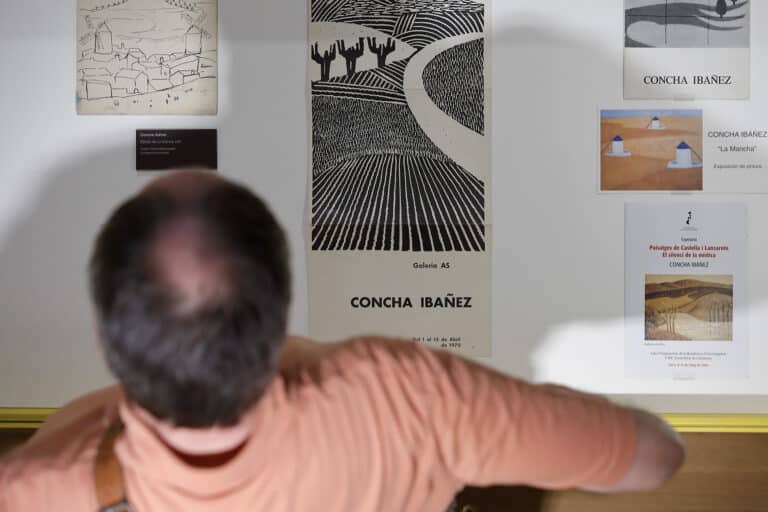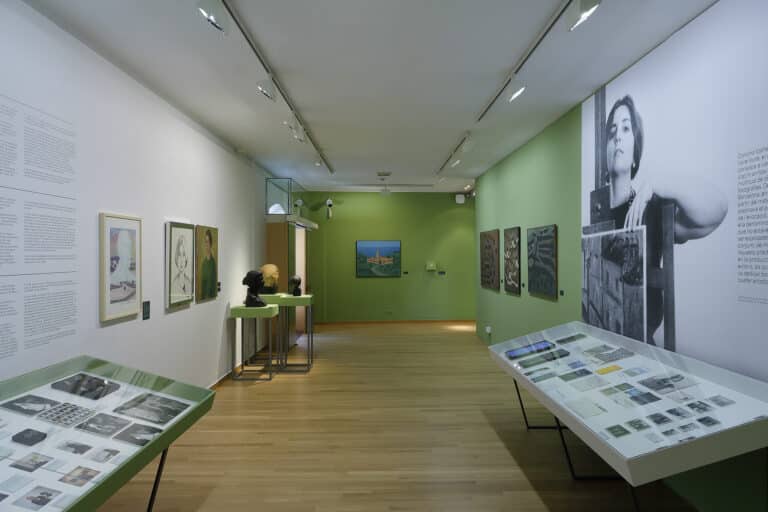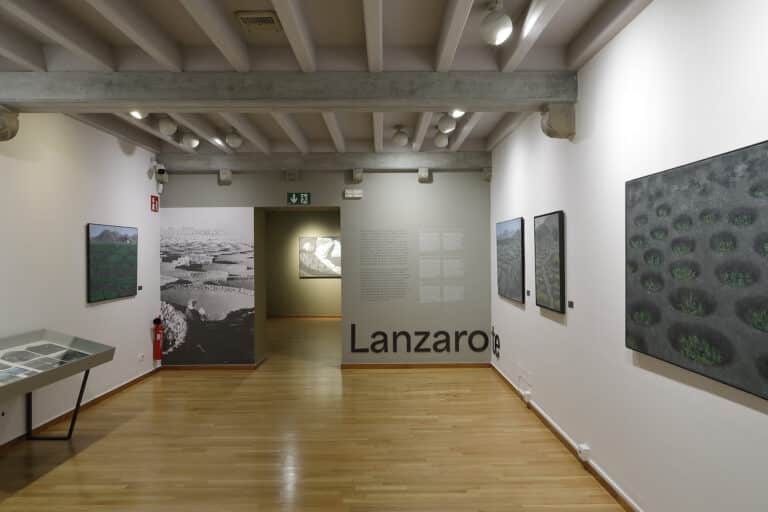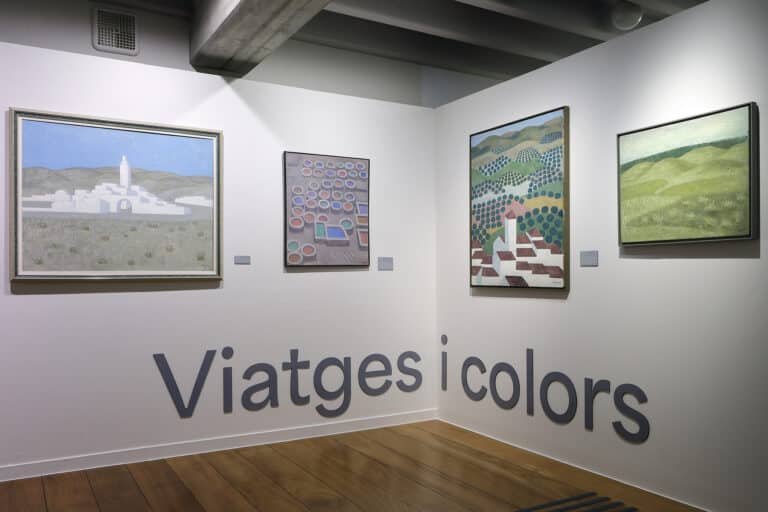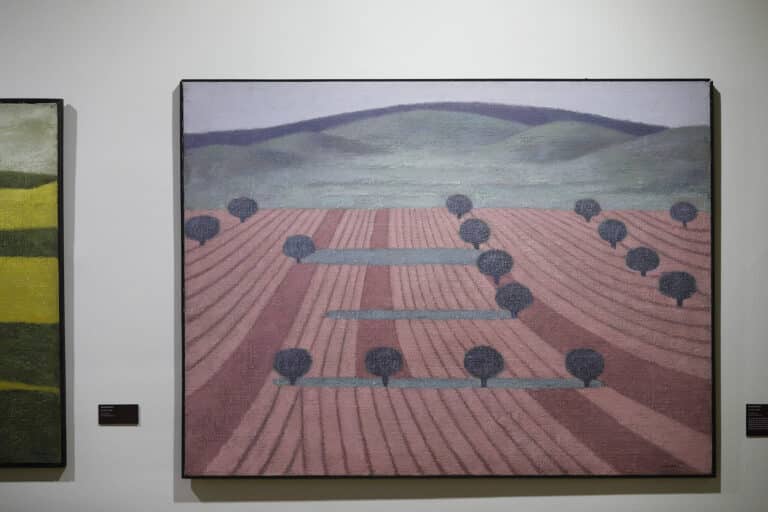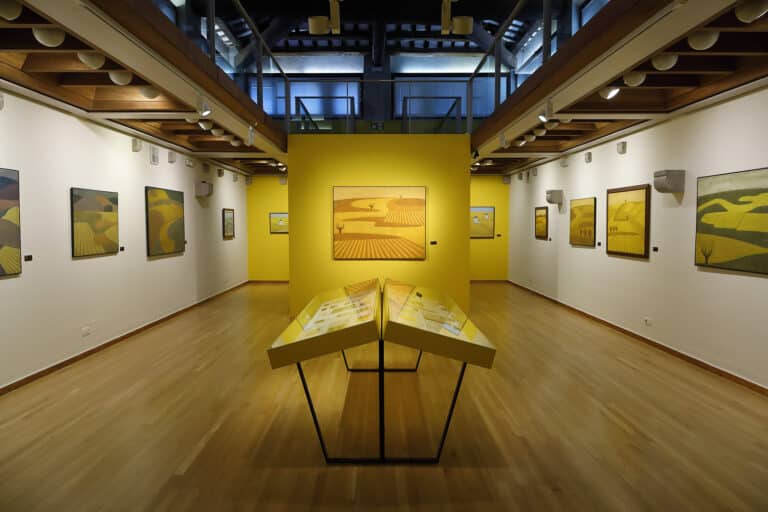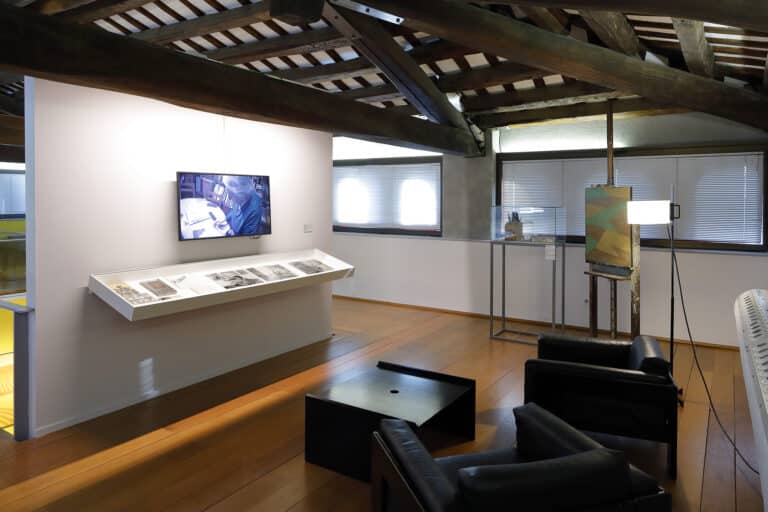

“The Evocation of Landscape” is the first exhibition in Catalonia dedicated to Concha Ibáñez after her death, in 2022, and coincides with the centenary of her birth. Far from being an anthological exhibition, it aims to focus on the theme in which the artist excelled and to which she devoted herself most diligently throughout her career: landscape.
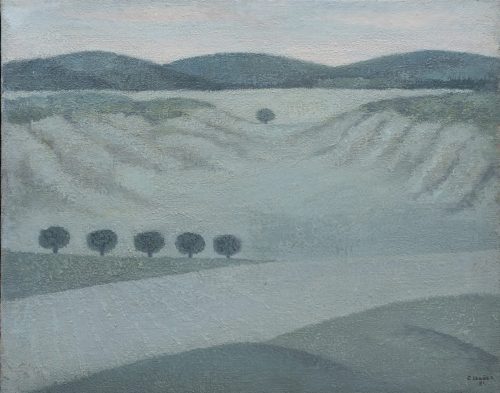
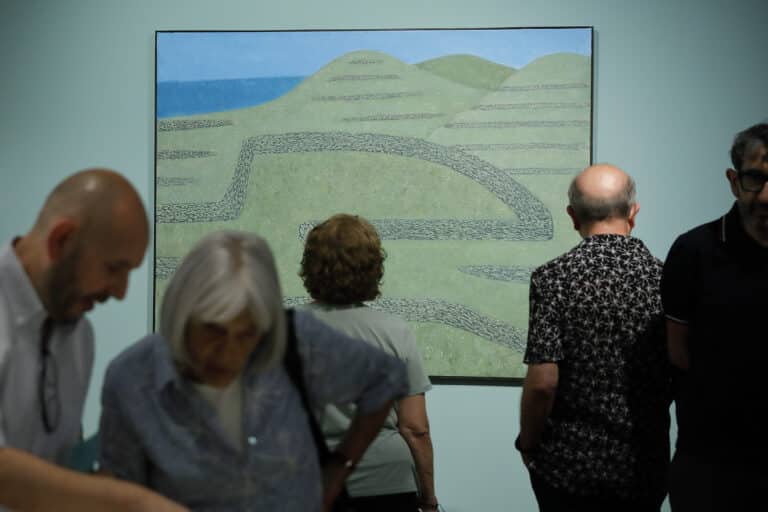
For the first time, the public has the opportunity to see a significant sample of the artist’s best-known landscape series, as well as some of his most representative works from other series. These are landscapes painted from memory of those he had seen and visited on his numerous trips. He painted each place multiple times, and gave it certain colors, within the chromatic restriction he practiced, that have become chromatic ranges that identify each place.
In Concha Ibáñez’s work, nothing is naturalism or reality, quite the opposite: construction, artifice and synthesis, as well as the subtle brushwork with abstraction, shaped the language that always interested her. The result is a painting of great power, both visual and spiritual, which makes this artist one of the essential landscape painters in the history of Catalan art.
Concha Ibáñez never painted outdoors; her creative process consisted of traveling to the chosen location and, once she arrived, making a multitude of drawings, sketches and photographs. Back in Barcelona, in her studio, and from the material obtained, she captured the landscape through evocation, making what she called “series”, although they were not intended to be exhibited or sold as a whole, in an exclusive way. She maintained this practice in the production of engravings and exlibris, to which the artist also dedicated a good part of her artistic work.
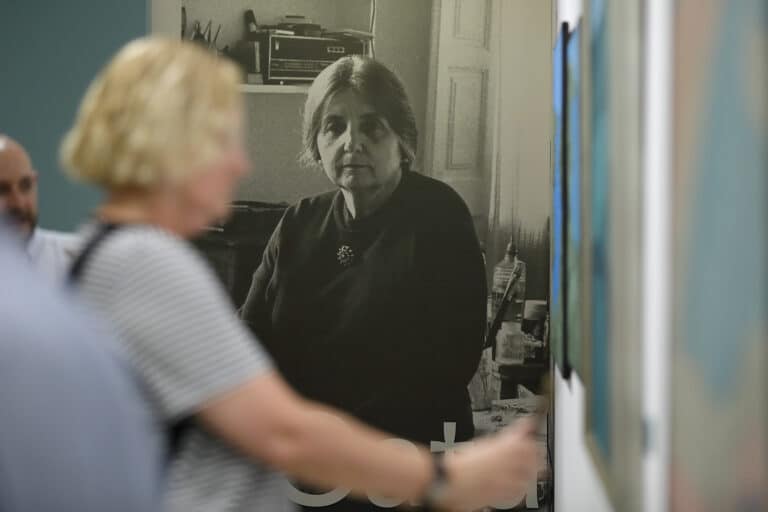
Concepción Ibáñez Escobar was born on March 12, 1926 in Canet de Mar (Barcelona), where her maternal grandmother ran a shop. Her parents, Francisco and Cristina, were from Instinción (Almería). Concha Ibáñez was the eldest of three sisters.
Shortly after her birth, the family moved to the Clot neighborhood of Barcelona. Little Concha began attending a private school, where she received her basic education. In the 1940s, the three sisters received training in cutting and tailoring and obtained the title that accredited them to become dressmaking masters.
While working as a dressmaker, Ibáñez began attending the art school in the Poblenou neighborhood —along with her sisters—, where the painter Josep Oriol Baqué Mercader (1900-1966), who was primarily a landscape painter, taught. From 1946 to 1959 she studied at the Llotja School of Arts and Crafts in Barcelona, where she took individual subjects, without taking exams. During these same years she also began to attend the Sant Lluc Art Circle (Barcelona) in the afternoons, where she participated in the life drawing workshop. She would later become a member of several boards of directors of this legendary entity. In the 1960s she returned to the Llotja to study lithography, the intaglio technique in which she later excelled.
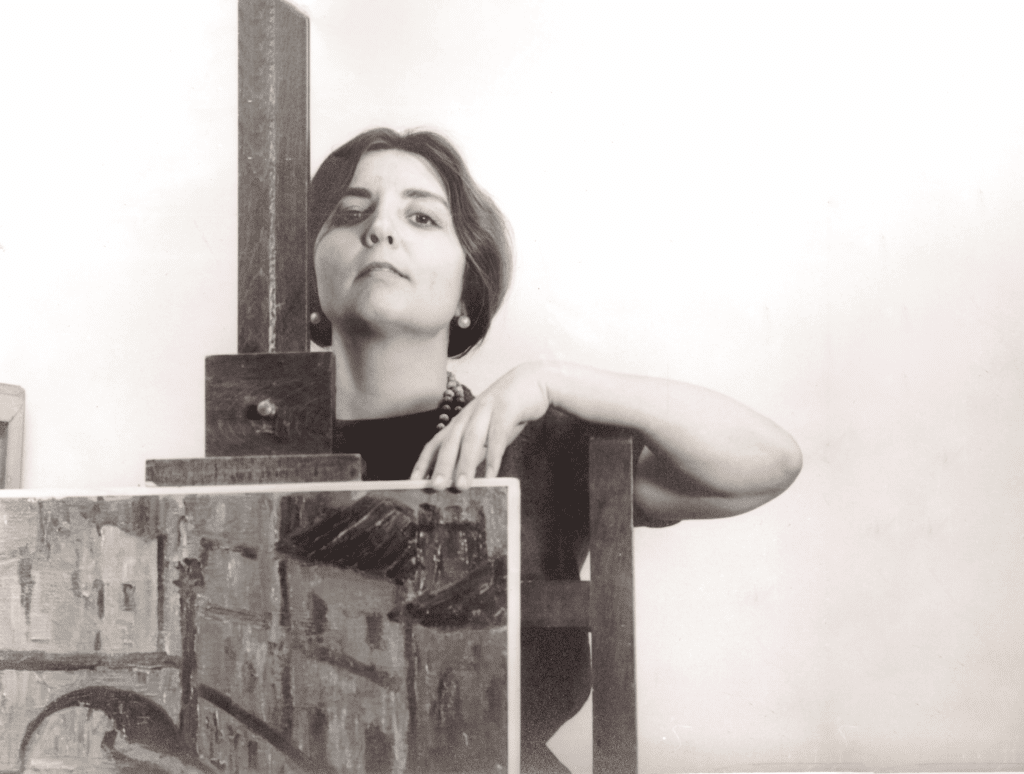
His mother died in 1956. Ibáñez continued to live with his father until his death in 1976, as the artist had decided not to form a couple or have children.
Concha Ibáñez considered 1960 to be the starting point of her career as a professional artist, since that year she presented her first exhibition at the Sala Jaimes on Passeig de Gràcia in Barcelona. From then on, the exhibitions would follow one another at an exceptional pace; she usually prepared between four and six individual shows per year in different cities, and many more collective exhibitions. Her work could be seen in the most prominent galleries and art centers of the time. The artist exhibited in a multitude of Catalan towns (Girona, Lleida, Tarragona, Mataró, Vic, Figueres…), national (Madrid, Salamanca, Zaragoza, Pamplona, Palma, A Coruña…) and foreign (Brussels, New York, Bangkok and cities in Austria and Cuba). She always obtained great critical and public success that allowed her to live from her artistic work.
Concha Ibáñez died in Barcelona on December 22, 2022. The country’s press echoed the news and published emotional obituaries that praised her artistic career.